
10x60 Chevron Pattern
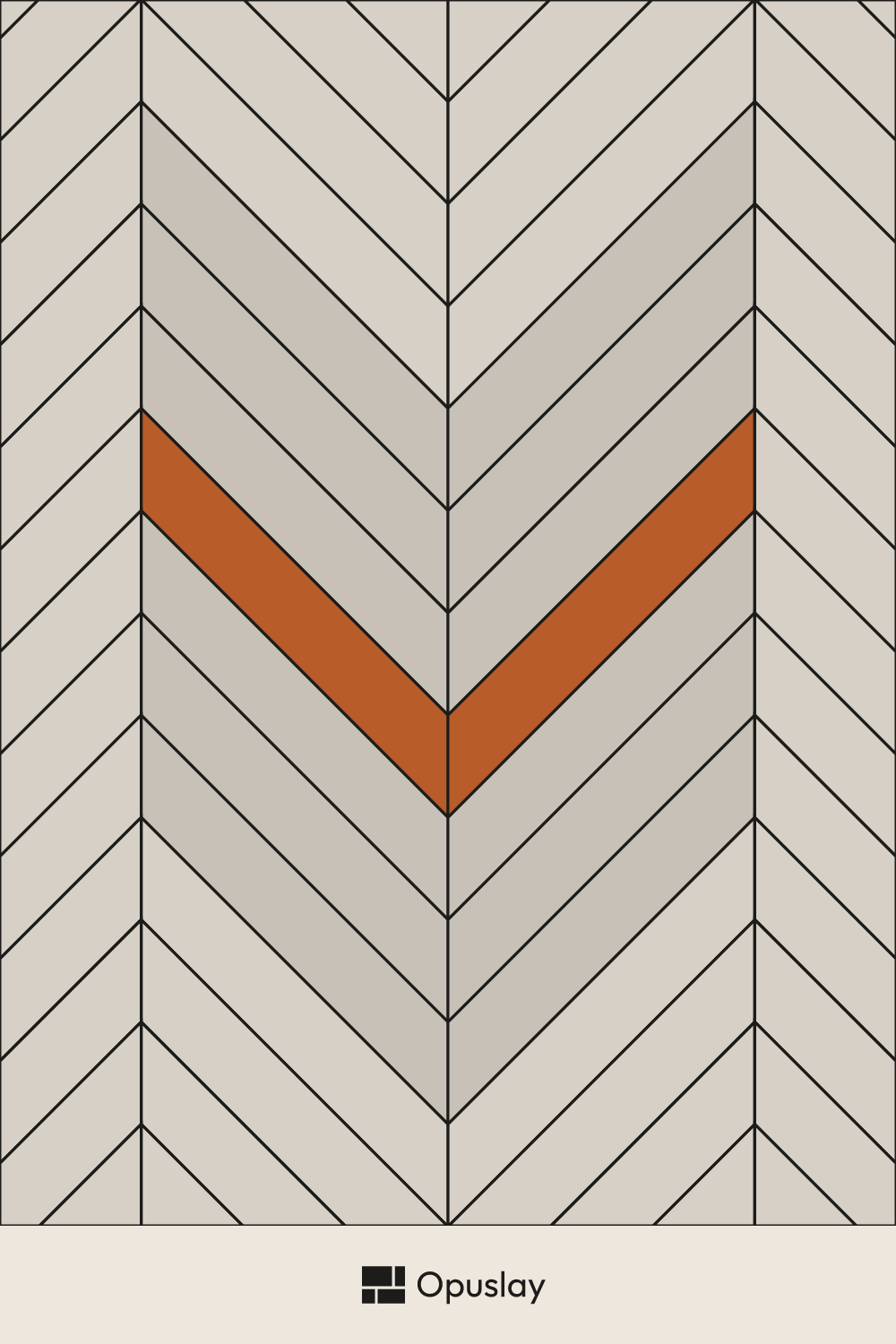
The 10x60 chevron pattern mitres wide wood-look planks at 45° so they meet in a single continuous V, a wider-format take on the classic 3x12 chevron layout with a bolder, more graphic joint line and sharper vertical seams than herringbone.
Last updated: 2026-07-19
10x60 Chevron Pattern
Opuslay — tile layout worksheet- Room:
- 3 m × 2.5 m
- Units:
- Metric (cm / m²)
- Anchor:
- Left · Top
- Layout angle:
- Straight
- Tile colours:
- Single colour
Material breakdown
| Format | Qty / Pattern | Share | Qty / Room | Area / Room |
|---|---|---|---|---|
| 10x60 cm | 2 | 100.0% | 165 | 7.50 m² |
| Total | 2 | 100% | 165 | 7.50 m² |
What you'll need to buy
Tiles to buy
| 10x60 cm | 179 tiles | 10.74 m² |
Total 179 tiles · 10.74 m² (incl. 43% cuts & breakage)
Adhesive & grout
- Thin-set adhesive: ≈ 40.5 kg (2 × 50 lb bags) — recommended trowel: 12mm notch, large format
- Grout — the tile sets the joint width, not you:
- ≈ 4.0 kg (1 × 10 lb bag) — 3mm joint, rectified / tight-set tile
- ≈ 6.7 kg (1 × 25 lb bag) — 5mm joint, natural or non-rectified tile
Adhesive: allow a little over on an uneven substrate, or if you back-butter large tiles — both eat more than a flat bed.
Grout: the 25 lb bag is the usual size (10 lb for small jobs). Buy it in one go and stick to a single bag size: bags from different batches can dry to slightly different shades.
It's the tile that decides the joint, not the setter — dry-lay a section to find your width. Assumes 9.5mm tile depth; adjust for your product — thicker tiles need more.
Share & export
Save the 10x60 Chevron Pattern layout to your moodboard, or send the link to your tiler — it reopens with your room dimensions.

About the 10x60 Chevron Pattern
Chevron takes its name from the V-shaped insignia, and unlike herringbone's 90° zigzag, its planks are cut at a 45° mitre so opposing pieces line up into one unbroken diagonal line — a more labor-intensive cut that reads as a cleaner, more formal pattern.
As wide wood-look planks became popular in porcelain and ceramic, 10x60 chevron emerged as a large-scale option for hallways and open floors where a bold, continuous V makes the most visual impact.
Frequently Asked Questions
What's the difference between chevron and herringbone?
Herringbone tiles meet at a 90° angle with a stepped zigzag joint, while chevron planks are mitered at 45° so they form one unbroken, continuous V — a cleaner, more formal look.
Is 10x60 chevron harder to install than smaller chevron sizes?
Yes — mitered cuts require precise angles on every plank, and the larger the plank, the less forgiving the room's perimeter cuts are, so installers usually charge more for large-format chevron than for smaller sizes.
How much waste should I allow for chevron tile?
Plan for around 15-20% waste, similar to herringbone, to cover the mitered cuts required at room edges and corners.
Can 10x60 chevron be used with wood-look ceramic tile?
Yes — chevron is most commonly done in wood-look ceramic or porcelain planks, reproducing a mitered wood parquet chevron floor without real timber.
See the 3x12 chevron layoutSee the steeper 60 degree chevron (same 3x12 plank, sharper V)See the shallower 30 degree chevron (same 3x12 plank, wide open V)