
Checkerboard Tile Pattern
A checkerboard tile pattern alternates two tile colours across a straight grid so no two touching tiles share a colour — the classic two-tone floor. This calculator lays it out on a 12x12 grid, the size most checkerboard floors use, and counts how many tiles of each colour your room needs. It's rarely an even split: the balance depends on how many tiles fit your room and where the layout is anchored. The same two-tone treatment works just as well on larger squares like 24x24 and 18x18.
12x12 Tile Pattern
Opuslay — tile layout worksheet- Room:
- 3 m × 2.5 m
- Units:
- Metric (cm / m²)
- Anchor:
- Left · Top
- Layout angle:
- Straight
- Tile colours:
- 2 colours
Material breakdown
| Format | Share | Qty / Room | Area / Room |
|---|---|---|---|
| 30x30 cm | 100.0% | 90 | 7.50 m² |
| Color A | 50.0% | 45 | 3.75 m² |
| Color B | 50.0% | 45 | 3.75 m² |
| Total | 100% | 90 | 7.50 m² |
What you'll need to buy
Tiles to buy
| 30x30 cm · Color A | 46 tiles | 4.14 m² |
| 30x30 cm · Color B | 46 tiles | 4.14 m² |
Total 92 tiles · 8.28 m² (incl. 10% cuts & breakage)
Adhesive & grout
- Thin-set adhesive: ≈ 24.4 kg (2 × 50 lb bags) — recommended trowel: 10mm notch
- Grout — the tile sets the joint width, not you:
- ≈ 2.3 kg (1 × 10 lb bag) — 3mm joint, rectified / tight-set tile
- ≈ 3.8 kg (1 × 10 lb bag) — 5mm joint, natural or non-rectified tile
Adhesive: allow a little over on an uneven substrate, or if you back-butter large tiles — both eat more than a flat bed.
Grout: the 25 lb bag is the usual size (10 lb for small jobs). Buy it in one go and stick to a single bag size: bags from different batches can dry to slightly different shades.
It's the tile that decides the joint, not the setter — dry-lay a section to find your width. Assumes 9.5mm tile depth; adjust for your product — thicker tiles need more.
Share & export
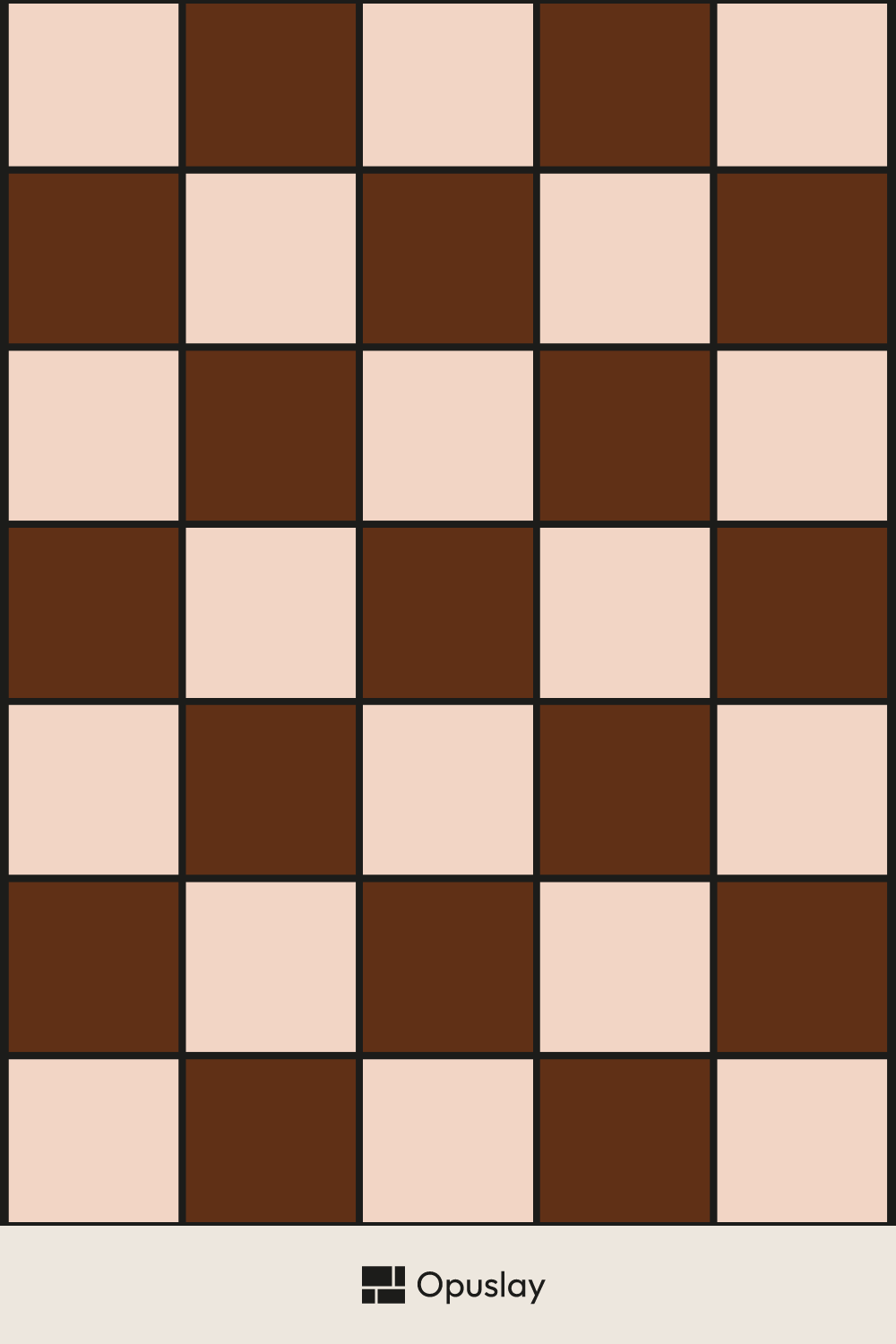
Save the 12x12 Tile Pattern layout to your moodboard, or send the link to your tiler — it reopens with your room dimensions.

Frequently Asked Questions
How many tiles of each colour do I need for a checkerboard floor?
It's rarely a 50/50 split. The exact count of each colour depends on how many tiles fit across and down your room and where the layout is anchored — an odd number of tiles in either direction tips the balance toward one colour. The breakdown table above splits the total by colour for your exact room.
What size tile is best for a checkerboard pattern?
Square tiles give the cleanest checkerboard, since every tile meets its neighbours on equal edges. 12x12 is the traditional choice for a diner-style floor, but the same alternation reads well at 18x18 or 24x24 for a more contemporary, large-format look.
Can any tile layout be made into a checkerboard?
Only layouts where tiles meet in a clean grid alternate cleanly into two colours. A running-bond (offset) layout puts some same-colour tiles edge to edge, so it reads as a two-tone brick rather than a true checkerboard. You can still apply two, three or four colours to any layout in the calculator — including a multi-colour patchwork look — and judge the result yourself.