
2x2 Square Chip Mosaic Tile Sheet
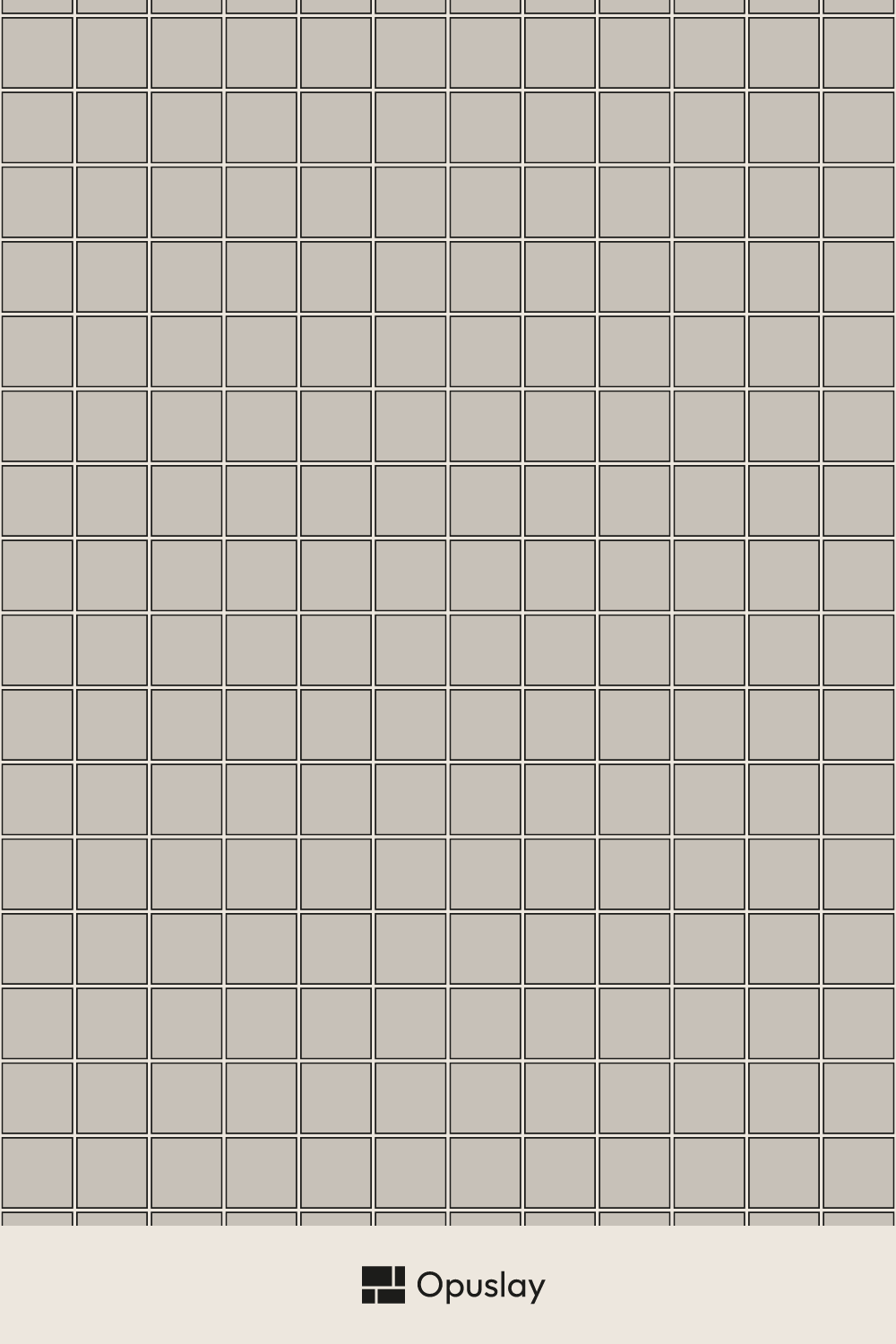
A mosaic tile sheet is not laid tile by tile: the chips arrive already spaced and mesh-mounted, so what you actually set — and what you actually buy — is the sheet. The square chip formats sold this way in the US are 1x1 and 2x2 chips on 12-inch sheets, the same footprint as a single 12x12 tile. This page lays out the 2x2 chip: Opuslay models the sheet with its real chip spacing, six chips to a row, and counts whole sheets plus the cuts at each edge — then sizes the grout for the joint network between every chip, which is where a mosaic tile pattern parts company with flat tile.
Last updated: 2026-08-07
2x2 Square Chip Mosaic Tile Sheet
Opuslay — tile layout worksheet- Room:
- 3 m × 2.5 m
- Units:
- Metric (cm / m²)
- Anchor:
- Left · Top
- Layout angle:
- Straight
- Tile colours:
- Single colour
Material breakdown
| Format | Qty / Pattern | Share | Qty / Room | Area / Room |
|---|---|---|---|---|
| 30x30 cm | 1 | 100.0% | 90 | 7.50 m² |
| Total | 1 | 100% | 90 | 7.50 m² |
What you'll need to buy
Sheets to buy
| 30x30 cm | 90 sheets | 8.10 m² |
Total 90 sheets · 8.10 m² (incl. 8% cuts & breakage)
Adhesive & grout
- Thin-set adhesive: ≈ 19.1 kg (1 × 50 lb bag) — recommended trowel: 5mm V notch
- Grout — mosaic sheets use far more than flat tile:
- ≈ 8.4 kg (1 × 25 lb bag) — dense mosaic joint network
Adhesive: allow a little over on an uneven substrate, or if you back-butter large tiles — both eat more than a flat bed.
Grout: the 25 lb bag is the usual size (10 lb for small jobs). Buy it in one go and stick to a single bag size: bags from different batches can dry to slightly different shades.
About 12% of the surface is joint, set by the sheet mesh — the calculator sizes grout for that dense network, not a flat-tile rate. Assumes 6mm tile depth; thicker tiles need more.
Share & export
Save the 2x2 Square Chip Mosaic Tile Sheet layout to your moodboard, or send the link to your tiler — it reopens with your room dimensions.

About the 2x2 Square Chip Mosaic Tile Sheet
The mesh-mounted sheet is what made small-format tile practical. Setting hundreds of loose chips by hand, each one spaced by eye, is slow and unforgiving; mounting them face-up on a mesh backing fixes the spacing at the factory and lets an installer place a square foot at a time. That is why the chip spacing is a property of the product rather than a choice on site — the joint between chips is decided before the sheet reaches you, and it is the same reason a mosaic can be cut through the mesh at a wall without wasting much material.
Two consequences follow, and both surprise people costing a mosaic for the first time. The adhesive side is straightforward but easy to get wrong: mosaic chips are thin, often 5 mm or less, and a large notched trowel pushes so much adhesive up between the chips that it fills the joints from below and ruins the grouting. A small V-notch is the standard answer — Opuslay selects a 3/16" V-notch for sheet mosaic rather than the large-format trowel the sheet's own 12-inch footprint would otherwise suggest. The grout side is the bigger one: grout fills the full depth of every joint, so the volume you need is directly proportional to how thick the chips are. Doubling the thickness doubles the grout, on exactly the same floor area — which is why a grout coverage chart written for field tile will always under-call a mosaic.
Choosing a Mosaic Tile Sheet for a Shower Floor
A shower floor is where square chip mosaic earns its keep, and it is the reason most of these sheets are sold. A shower floor tile has to do two things a flat floor never asks of it: fall toward the drain in two directions at once, and stay safe underfoot when it is wet. A mesh-mounted sheet does both without a single mitre — the backing flexes over the slope so the chips follow it, and the joint running around every chip gives the surface its grip. That is why a tiled shower tray is almost always a mosaic, whatever is on the walls above it.
Chip size is the real choice, and it is a trade-off rather than a matter of taste. 1x1 chips follow a steep or double fall more closely and pack more joint into every square foot, so they grip better and dish toward a centre drain more smoothly. 2x2 chips are quicker to set, easier to hold flat, and leave a calmer surface that is less work to keep clean. On a standard tray with a centre drain, 2x2 is the usual compromise; on a small tray, a steep fall, or anywhere the slope changes direction sharply, drop to 1x1 and accept the extra grouting.
Whichever you pick, size the grout before you shop rather than after. A shower floor is a small area, so the sheet count is low and the offcuts reuse well — a cut through a mosaic normally falls in the mesh between chips rather than through a tile — but the joint network is dense, and grout is the line people under-order. Set your tray dimensions above and the calculator counts the whole sheets, the cut sheets and the grout that this particular chip size actually takes, instead of applying a coverage figure written for field tile.
Frequently Asked Questions
How many 2x2 chips are on a mosaic tile sheet?
Thirty-six — six rows of six on a standard 12-inch sheet. The chip is slightly under 2 inches so that the chip plus its joint comes to exactly 2 inches, and six of those land squarely on a 12-inch sheet. That is the arithmetic every mosaic sheet is built around, whatever the chip size.
How many mosaic tile sheets will I need?
That depends on your room, not a rule of thumb. Opuslay lays the sheets out against your actual dimensions and counts whole sheets plus the cuts at each edge, so the total already includes trimming — and you shop by the sheet, the way mosaic is sold. Cutting waste is unusually low on a mosaic, because a cut normally falls in the mesh between chips rather than through a tile.
Do mosaic sheets use more grout than regular tile?
Far more. A mosaic has a joint running around every single chip, so a much larger share of the surface is grout than on flat field tile. On this 2x2 layout roughly an eighth of the surface is joint; on a finer chip it is more still. Opuslay estimates grout from that actual joint fraction rather than treating the sheet as one large tile — but always check your grout manufacturer's coverage figures for small-format mosaic before you order.
Does the thickness of the mosaic change how much grout I need?
Yes, and it is the single biggest factor. Grout fills each joint over the full depth of the chip, so the volume needed is proportional to thickness: the same floor in 8 mm chips takes roughly twice the grout of one in 4 mm chips. Opuslay assumes a typical thin mosaic; if your chips are thicker, scale the grout figure up in the same proportion.
What trowel should I use for mosaic sheets?
A small V-notch, not the large notch a 12-inch tile would call for. Mosaic chips are thin, and too much adhesive under a thin chip is squeezed up into the joints, where it sets and leaves no room for grout. Opuslay selects a 3/16" V-notch (5 mm) for sheet mosaic for that reason. Back-buttering is rarely needed — the mesh backing already holds the chips at a consistent height.
Where are square chip mosaics normally used?
Shower floors above all, where the many joints give grip underfoot and the small chips let the surface fall toward a drain without cutting; then bathroom floors, pool surrounds and splashbacks. The same properties that make a mosaic grout-hungry are what make it work in wet areas.
See the herringbone mosaic sheet (1x3 chips already set at 45 degrees)See the 1x1 chip mosaic sheet (144 square chips per sheet)See the micro chip mosaic sheet (half-inch chips, 576 per sheet, the most grout of the family)See the mini brick mosaic sheet (rectangular chips in a half-offset running bond)See the kit-kat mosaic sheet (slim finger chips on an aligned grid)