
Mosaic Tile Sheet Layout — 50x50 Square Chips
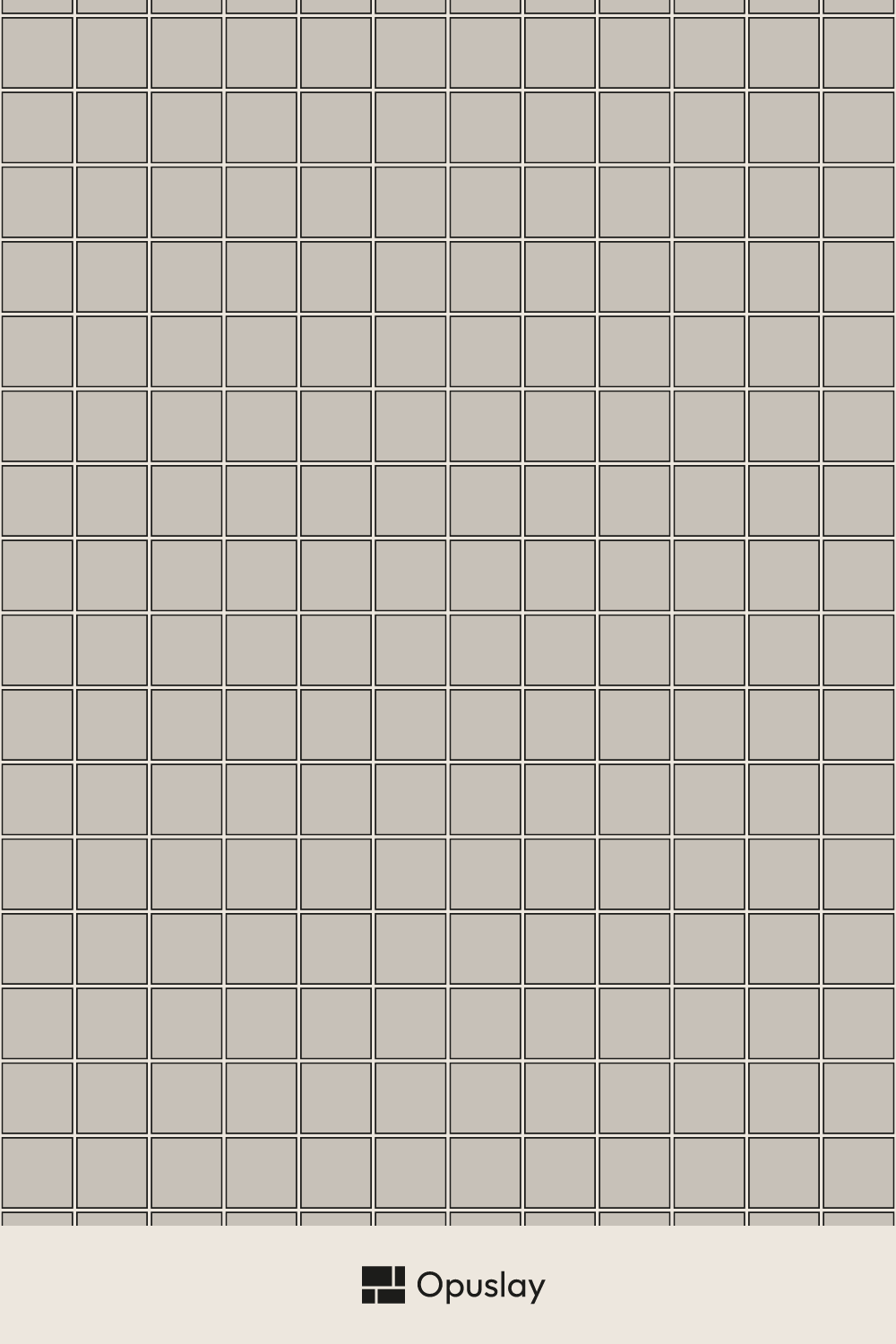
A mosaic tile sheet is bought, laid and counted as a single unit — the sheet, not the tessera. On this range that unit is a 300x300 mesh sheet carrying 50x50 tesserae, six to a row, 36 tesserae per sheet. The nominal figure hides the real one: each tessera measures closer to 47mm, and the missing 3mm is the joint — a grid of joint dense enough to change how you order and how you fix, and the true subject of this page. Opuslay lays whole and cut sheets against your actual room and counts them, then works out how much grout that joint network really needs, rather than treating the sheet as one large tile.
Last updated: 2026-08-13
50x50 Mosaic Tile Sheet
Opuslay — tile layout worksheet- Room:
- 3 m × 2.5 m
- Units:
- Metric (mm / m²)
- Anchor:
- Left · Top
- Layout angle:
- Straight
- Tile colours:
- Single colour
Material breakdown
| Format | Qty / Pattern | Share | Qty / Room | Area / Room |
|---|---|---|---|---|
| 300x300 mm | 1 | 100.0% | 90 | 7.50 m² |
| Total | 1 | 100% | 90 | 7.50 m² |
What you'll need to buy
Sheets to buy
| 300x300 mm | 90 sheets | 8.10 m² |
Total 90 sheets · 8.10 m² (incl. 8% cuts & breakage)
Adhesive & grout
- Thin-set adhesive: ≈ 19.1 kg (1 × 20 kg bag) — recommended trowel: 5mm V notch
- Grout — mosaic sheets use far more than flat tile:
- ≈ 8.4 kg (1 × 10 kg bag) — dense mosaic joint network
Adhesive: allow a little over on an uneven substrate, or if you back-butter large tiles — both eat more than a flat bed.
Grout: bag sizes vary by brand — 10 kg is a common one (2.5 kg for small jobs). Buy it in one go and stick to a single bag size: bags from different batches can dry to slightly different shades.
About 12% of the surface is joint, set by the sheet mesh — the calculator sizes grout for that dense network, not a flat-tile rate. Assumes 6mm tile depth; thicker tiles need more.
Share & export
Save the 50x50 Mosaic Tile Sheet layout to your moodboard, or send the link to your tiler — it reopens with your room dimensions.

About the 50x50 Mosaic Tile Sheet
The joint spacing on a mesh-mounted sheet is decided at the factory, not on site. Each tessera is fixed to its mesh backing at a set pitch before the sheet reaches an installer — the same convention as a full-size tile, a grid is a tile plus a joint, only here it is small enough to see at a glance: a nominal 50mm cell resolves into a 47mm tessera and a 3mm joint, tile by tile, across the whole sheet. That fixed spacing is also why a mosaic cuts so cleanly at an edge: because the mesh carries the pattern rather than the tesserae, a straight cut through a sheet almost always falls in the joint between two of them rather than through one, so wastage at a wall or corner stays low without any special skill. It settles one more thing, and it is the question an installer never gets to answer: the joint between two sheets has to match the joint inside them, or the grid of the sheets themselves reads across the floor once it is grouted — a faint line every 300mm, which is the one thing a mesh-mounted mosaic is not meant to show.
Two things follow on site, and both catch out anyone used to full-size tile. The trowel is the first: mosaic tesserae are thin, often 5mm or less, and a notch sized for a 300mm sheet pushes far more adhesive between them than a joint that shallow can hold, so it squeezes up and fills the joint from below before grout ever reaches it. Opuslay specifies a 5mm V-notch for sheet mosaic for that reason, not the wider notch the sheet's own footprint would suggest. The second is grout, and it is the bigger cost: grout fills a joint over its full depth, so the volume needed is directly proportional to tessera thickness, on exactly the same floor area — doubling the thickness doubles the grout. A coverage figure written for ordinary field tile will always under-call a mosaic for this reason alone.
A Mosaic Tile Sheet for a Shower Floor
A shower floor is where a square-chip sheet earns its keep. Unlike a flat room floor, it has to fall toward a drain from two or four directions at once, and the mesh backing makes that possible: it flexes over the slope so the tesserae follow it, something a rigid tile cannot do without a wedge cut at every row. The joint network that makes this page mostly about grout is the same one that gives a wet floor its grip underfoot — more joint means more grout to order, but also the slip resistance a shower floor actually needs. A tray this small is covered quickly; it is the grouting that takes the time.
Cutting around a drain is the other skill this floor asks for, and it plays to the sheet's strength. Because the pattern lives in the mesh rather than in any single tessera, a curved cut around a drain body falls tessera by tessera along the joint, so the offcuts stay small and usable rather than being thrown away whole. The same is not true of a large-format wall tile chosen to sit above the same shower — a format such as 300x600 tile on the walls needs a single, careful mitre at the return, and pairing it with mosaic underfoot is a common and deliberate contrast: large, few joints above, small and grout-dense below.
The area itself is small, which is exactly why grout is where people under-order. A shower tray rarely runs past a square metre or two, so the sheet count looks trivial and gets little thought — but the joint fraction on this pattern is close to an eighth of the surface, far higher than the field tile most people are used to costing. Set the tray dimensions above and Opuslay counts the whole and cut sheets the layout actually needs, then works the grout from the real joint network on that same floor, rather than a coverage figure written for a much larger tile.
Frequently Asked Questions
How many tesserae are on a mosaic tile sheet?
Thirty-six on a standard 300mm sheet, laid out six by six. The tesserae themselves measure closer to 47mm; the remaining 3mm of each 50mm cell is the joint, fixed at the factory rather than set on site. That arithmetic — tessera plus joint landing on a round number — is what lets a whole number of tesserae tile a sheet edge to edge.
How many mosaic sheets will I need for my room?
That comes from your actual room, not a rule of thumb. Opuslay lays whole and cut sheets against your real dimensions and counts both, so the total already accounts for trimming. Wastage tends to be low on this pattern, because a cut sheet almost always splits in the joint between two tesserae rather than through one.
Does a mosaic sheet need more grout than an ordinary tile?
Yes, by a wide margin. A mosaic has a joint running around every tessera, so roughly an eighth of this pattern's surface is joint against a few per cent for a normal floor tile. Opuslay works the grout from that real joint network rather than treating the sheet as one large tile — always check the figure against your grout manufacturer's guidance before ordering.
What trowel should I use for a mosaic sheet, and why not the one for a 300mm tile?
A small 5mm V-notch, not the larger notch a 300mm tile format would suggest. Mosaic tesserae are thin, and too much adhesive pushed up under a thin tessera fills the joint from below, leaving no room for grout once it sets. The sheet overall size is not what sizes the trowel — tessera thickness is, and it stays thin whatever the sheet footprint.
How wide should the joint between mosaic sheets be?
The same as the joints inside the sheet — here 3mm, because that is the pitch the mesh was built to. It is not a matter of preference: a wider or tighter joint where two sheets meet leaves a visible grid across the floor after grouting, one faint line every 300mm. Set the sheets so the spacing runs on unbroken, and the last row of tesserae on one sheet will look no different from the first on the next.
Where does a square-chip mosaic sheet make sense, and where doesn't it?
Shower floors above all, where the dense joint network gives grip and the mesh follows a fall to the drain — also bathroom floors, pool surrounds and splashbacks. It makes less sense across a large, flat living area, where the same joint density means far more grout and far more grouting work for no real benefit underfoot. For a mesh mosaic in a different shape rather than a different chip size, the octagon and dot pattern follows the same sheet logic.
See the herringbone mosaic sheet (1x3 chips already set at 45 degrees)See the 1x1 chip mosaic sheet (144 square chips per sheet)See the micro chip mosaic sheet (half-inch chips, 576 per sheet, the most grout of the family)See the mini brick mosaic sheet (rectangular chips in a half-offset running bond)See the kit-kat mosaic sheet (slim finger chips on an aligned grid)