
Subway Tile Pattern
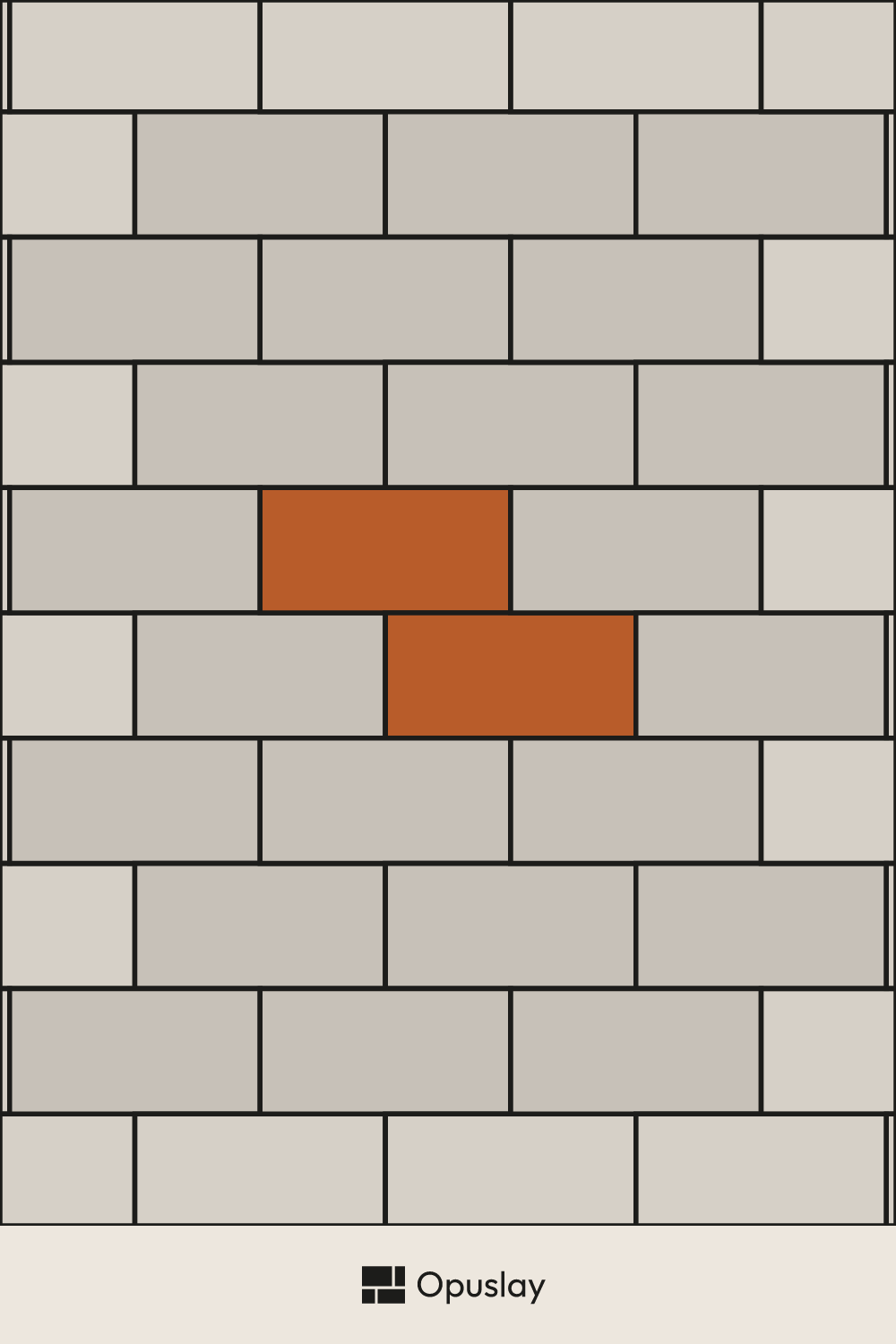
The subway tile pattern here is built from a single small rectangular tile sized 100 x 200mm — the same running-bond idea long known as metro tile in the trade — laid in a half-offset running bond, where each row shifts by half the tile length so every vertical joint lands at the midpoint of the tile above and below. As with any tile grid, the 100 x 200mm nominal is a grid measurement rather than the tile itself: expect a tile closer to 97 x 197mm plus a joint of around 3mm, a convention shared across manufacturers but rarely spelled out.
Last updated: 2026-08-05
Subway Tile Pattern
Opuslay — tile layout worksheet- Room:
- 3 m × 2.5 m
- Units:
- Metric (mm / m²)
- Anchor:
- Left · Top
- Layout angle:
- Straight
- Tile colours:
- Single colour
Material breakdown
| Format | Qty / Pattern | Share | Qty / Room | Area / Room |
|---|---|---|---|---|
| 100x200 mm | 2 | 100.0% | 387 | 7.50 m² |
| Total | 2 | 100% | 387 | 7.50 m² |
What you'll need to buy
Tiles to buy
| 100x200 mm | 394 tiles | 7.88 m² |
Total 394 tiles · 7.88 m² (incl. 5% cuts & breakage)
Adhesive & grout
- Thin-set adhesive: ≈ 20.3 kg (2 × 20 kg bags) — recommended trowel: 6mm notch
- Grout — the tile sets the joint width, not you:
- ≈ 5.1 kg (1 × 10 kg bag) — 3mm joint, rectified / tight-set tile
- ≈ 8.6 kg (1 × 10 kg bag) — 5mm joint, natural or non-rectified tile
Adhesive: allow a little over on an uneven substrate, or if you back-butter large tiles — both eat more than a flat bed.
Grout: bag sizes vary by brand — 10 kg is a common one (2.5 kg for small jobs). Buy it in one go and stick to a single bag size: bags from different batches can dry to slightly different shades.
It's the tile that decides the joint, not the setter — dry-lay a section to find your width. Assumes 9.5mm tile depth; adjust for your product — thicker tiles need more.
Share & export
Save the Subway Tile Pattern layout to your moodboard, or send the link to your tiler — it reopens with your room dimensions.

About the Subway Tile Pattern
Small glazed rectangular wall tiles laid in a half-offset running bond have been a staple of transit and civic architecture since the early twentieth century, prized for their durable, light-reflecting surface — the origin of the pattern's enduring nickname.
On metric markets the format settled at 100 x 200mm rather than a direct conversion of that original tile: a size that suits standard box and sheet modules, cuts the number of joints per square metre compared with a smaller tile, and is sold today under both the subway and metro names, sometimes in taller variants closer to 100 x 300mm for the same layout.
Frequently Asked Questions
Is metro tile the same as subway tile?
Yes — metro tile and subway tile describe the same elongated rectangular tile laid in a half-offset running bond. Metro is the term long used by tile suppliers in the trade; subway is the more common name for the pattern itself, and both point to the same layout.
What offset should I use for a 100 x 200mm subway pattern?
A half-offset (50%) running bond is the traditional choice, and at this size it is a matter of taste rather than a technical constraint. What separates the two common options is the rhythm they produce: at a half offset the vertical joints come back into line every second row, at a third offset every third row, which reads as a longer and less regular repeat. The stricter offset guidance written for long large-format tiles — where a half offset can leave one end of a tile standing proud of its neighbour — carries no real weight at this scale: a 200mm tile is short enough that either choice sits flat. Pick the rhythm you prefer.
Can a 100 x 200mm subway tile be laid vertically?
Yes — laying the tile with its long edge vertical, in either a stack or offset bond, is a common contemporary variation and works well on feature walls and shower surrounds. Only the offset direction changes; the calculator handles either orientation.
What joint size should I plan for a 100 x 200mm subway layout?
The 100 x 200mm figure is a grid measurement, so plan on a tile close to 97 x 197mm with a joint of around 3mm. Narrower joints are possible with rectified tile — check manufacturer guidance for the specific range you're using.
How much extra tile should I order for a subway layout?
A waste allowance of around 10% is typical for a running-bond subway layout on a straight wall, with more if the room includes many corners, niches or a feature border.