
Octagon and Dot Mosaic — 50mm Octagons
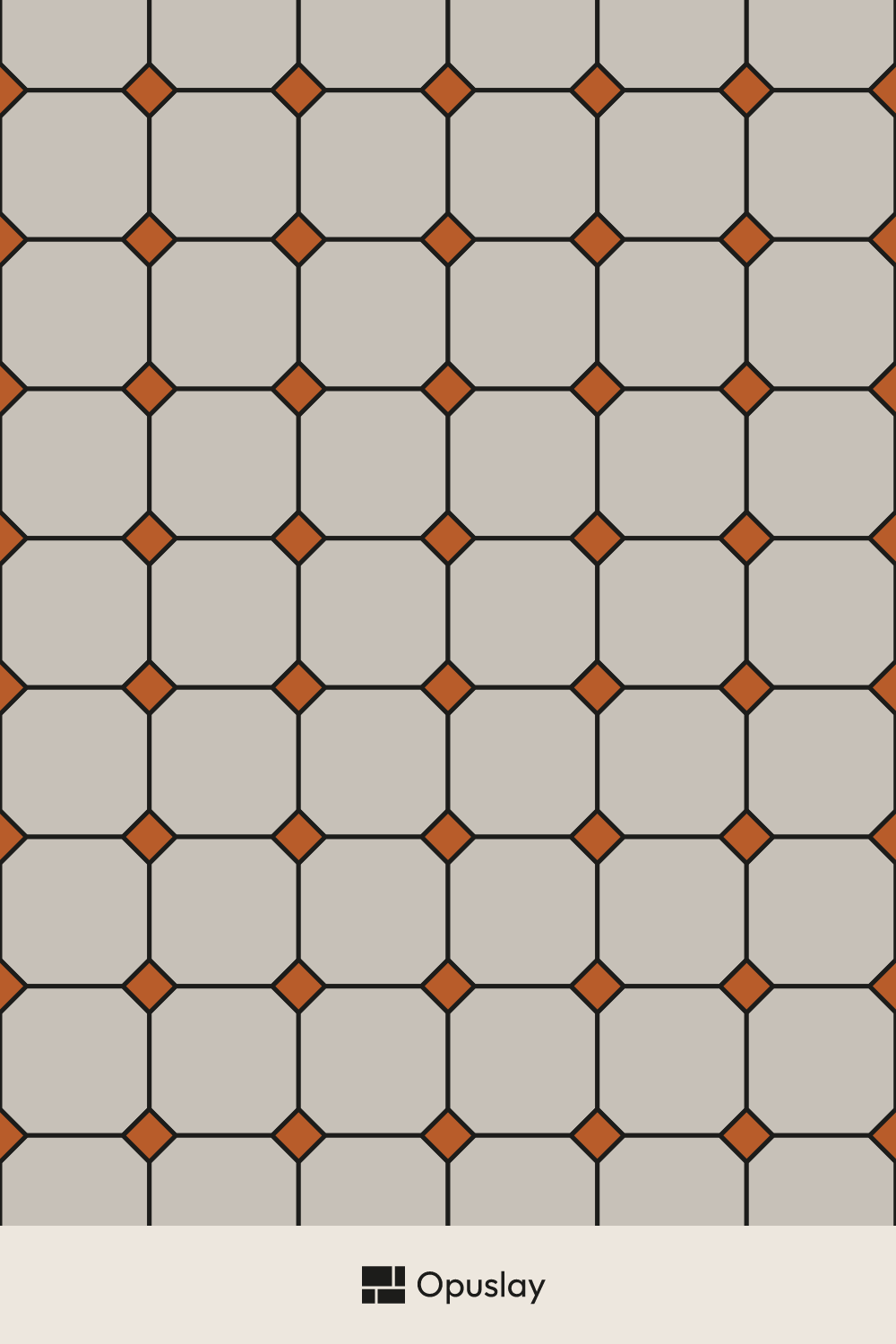
Octagon and dot is a small-format mosaic pattern: octagons paired with a tiny square cabochon set at 45 degrees in each corner gap, pre-mounted on 300 x 300mm mesh sheets rather than sold as individual tiles. Each sheet carries six 50mm octagons side by side, so the calculator counts sheets, not loose pieces — the number that actually matters when ordering a mesh-mounted mosaic. The real installation skill is at the seams: keeping the mesh grid running continuously from one sheet to the next so the joint at a seam reads no wider than the joints within a sheet.
Last updated: 2026-08-05
Octagon and Dot Mosaic — 50mm Octagons
Opuslay — tile layout worksheet- Room:
- 3 m × 2.5 m
- Units:
- Metric (mm / m²)
- Anchor:
- Left · Top
- Layout angle:
- Straight
- Tile colours:
- Single colour
Material breakdown
| Format | Qty / Pattern | Share | Qty / Room | Area / Room |
|---|---|---|---|---|
| 300x300 mm | 1 | 100.0% | 90 | 7.50 m² |
| Total | 1 | 100% | 90 | 7.50 m² |
What you'll need to buy
Tiles to buy
| 300x300 mm | 90 tiles | 8.10 m² |
Total 90 tiles · 8.10 m² (incl. 8% cuts & breakage)
Adhesive & grout
- Thin-set adhesive: ≈ 24.4 kg (2 × 20 kg bags) — recommended trowel: 10mm notch
- Grout — the tile sets the joint width, not you:
- ≈ 2.3 kg (1 × 2.5 kg bag) — 3mm joint, rectified / tight-set tile
- ≈ 3.8 kg (1 × 10 kg bag) — 5mm joint, natural or non-rectified tile
Adhesive: allow a little over on an uneven substrate, or if you back-butter large tiles — both eat more than a flat bed.
Grout: bag sizes vary by brand — 10 kg is a common one (2.5 kg for small jobs). Buy it in one go and stick to a single bag size: bags from different batches can dry to slightly different shades.
It's the tile that decides the joint, not the setter — dry-lay a section to find your width. Assumes 9.5mm tile depth; adjust for your product — thicker tiles need more.
Share & export
Save the Octagon and Dot Mosaic — 50mm Octagons layout to your moodboard, or send the link to your tiler — it reopens with your room dimensions.

About the Octagon and Dot Mosaic — 50mm Octagons
Pairing an octagon module with a small square insert is a long-standing small-format mosaic idea, well suited to the wet, high-traffic floors of bathrooms, utility rooms, thresholds and shower trays — sold pre-mounted on mesh sheets for exactly that reason.
Interest in this scale of mosaic has been picking up again in character renovation work, particularly in projects that lean into a Victorian or Edwardian floor look.
Frequently Asked Questions
What is octagon and dot tile?
A small-format mosaic made of octagon-shaped tiles paired with a tiny square dot (cabochon), set at 45 degrees, filling the gap where four octagons meet. It's sold pre-mounted on mesh sheets rather than as loose tiles.
What size is a standard octagon and dot mosaic sheet?
300 x 300mm sheets carrying 50mm octagons are the standard size on metric mosaic ranges. Larger single-tile octagon formats exist too, but they're a distinct, more contemporary product sold by the tile rather than the sheet.
Where is octagon and dot mosaic typically used?
Mostly bathroom floors, shower floors, utility rooms and thresholds — small-format mosaics like this handle wet, high-traffic areas well, and the extra grout lines from all the small pieces add useful slip resistance underfoot.
What grout joint should I use for an octagon and dot mosaic?
Mesh-mounted mosaics of this scale typically use a narrower joint than full-size tile — check the manufacturer guidance for the specific sheet you're using, since spacing can vary slightly between ranges.
How do sheets line up at the seams?
The mesh grid is designed to continue from one sheet to the next, so line sheets up so the octagon spacing at a seam matches the spacing within each sheet rather than leaving a visibly wider joint at the join. When you do need to cut, cut through the mesh between two octagons rather than through an octagon itself — offcuts from a mosaic sheet like this reuse far better than offcuts from a larger tile.