Opuslay — tile pattern layout calculatorOpuslay
Prefer inch sizes? This page is also written for United States & Canada — view the inch version.
Esta página também existe em português, para Brasil & Portugal — ver a versão em português.

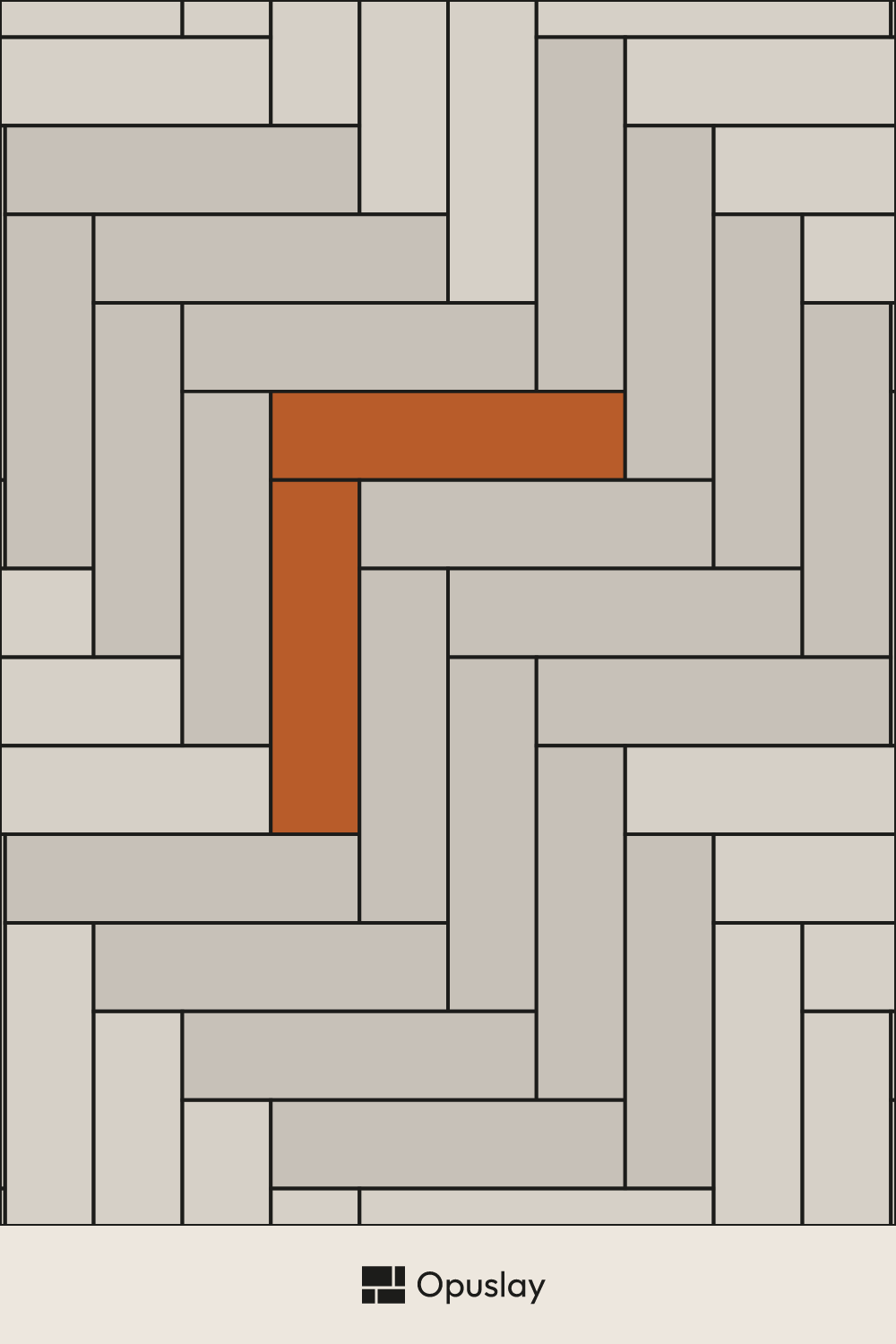
Herringbone Tile Pattern

The herringbone pattern lays rectangular tiles at a 90° angle to each other, so each tile's short edge meets the long edge of its neighbour, forming a repeating zigzag rather than a straight grid. A slim plank of around 300x75 mm is a popular size for the look, echoing the proportions of the wood parquet the pattern was first designed for.

Last updated: 2026-07-12

herringbone pattern

Opuslay — tile layout worksheet
Room:
3 m × 2.5 m
Units:
Metric (mm / m²)
Anchor:
Left · Top
Layout angle:
Straight
Tile colours:
Single colour
75x300 mm75x300 mm75x300 mm (cut)75x300 mm (cut)75x300 mm75x300 mm75x300 mm (cut)75x300 mm (cut)75x300 mm75x300 mm75x300 mm (cut)75x300 mm (cut)75x300 mm75x300 mm75x300 mm75x300 mm75x300 mm (cut)75x300 mm75x300 mm75x300 mm75x300 mm75x300 mm75x300 mm (cut)75x300 mm75x300 mm75x300 mm75x300 mm75x300 mm75x300 mm75x300 mm (cut)75x300 mm (cut)75x300 mm75x300 mm75x300 mm75x300 mm75x300 mm75x300 mm75x300 mm75x300 mm75x300 mm (cut)75x300 mm (cut)75x300 mm75x300 mm75x300 mm75x300 mm75x300 mm75x300 mm75x300 mm75x300 mm75x300 mm (cut)75x300 mm (cut)75x300 mm75x300 mm75x300 mm75x300 mm75x300 mm75x300 mm75x300 mm75x300 mm75x300 mm (cut)75x300 mm75x300 mm75x300 mm75x300 mm75x300 mm75x300 mm75x300 mm75x300 mm75x300 mm75x300 mm75x300 mm75x300 mm (cut)75x300 mm75x300 mm75x300 mm75x300 mm75x300 mm75x300 mm75x300 mm75x300 mm75x300 mm75x300 mm75x300 mm75x300 mm75x300 mm (cut)75x300 mm (cut)75x300 mm75x300 mm75x300 mm75x300 mm75x300 mm75x300 mm75x300 mm75x300 mm75x300 mm75x300 mm75x300 mm75x300 mm75x300 mm (cut)75x300 mm (cut)75x300 mm75x300 mm75x300 mm75x300 mm75x300 mm75x300 mm75x300 mm75x300 mm75x300 mm75x300 mm75x300 mm75x300 mm75x300 mm75x300 mm (cut)75x300 mm (cut)75x300 mm75x300 mm75x300 mm75x300 mm75x300 mm75x300 mm75x300 mm75x300 mm75x300 mm75x300 mm75x300 mm75x300 mm75x300 mm (cut)75x300 mm75x300 mm75x300 mm75x300 mm75x300 mm75x300 mm75x300 mm75x300 mm75x300 mm75x300 mm75x300 mm75x300 mm75x300 mm (cut)75x300 mm75x300 mm75x300 mm75x300 mm75x300 mm75x300 mm75x300 mm75x300 mm75x300 mm75x300 mm75x300 mm75x300 mm75x300 mm75x300 mm (cut)75x300 mm (cut)75x300 mm75x300 mm75x300 mm75x300 mm75x300 mm75x300 mm75x300 mm75x300 mm75x300 mm75x300 mm75x300 mm75x300 mm75x300 mm75x300 mm (cut)75x300 mm (cut)75x300 mm75x300 mm75x300 mm75x300 mm75x300 mm75x300 mm75x300 mm75x300 mm75x300 mm75x300 mm75x300 mm75x300 mm75x300 mm75x300 mm (cut)75x300 mm (cut)75x300 mm75x300 mm75x300 mm75x300 mm75x300 mm75x300 mm75x300 mm75x300 mm75x300 mm75x300 mm75x300 mm75x300 mm75x300 mm (cut)75x300 mm75x300 mm75x300 mm75x300 mm75x300 mm75x300 mm75x300 mm75x300 mm75x300 mm75x300 mm75x300 mm75x300 mm75x300 mm (cut)75x300 mm75x300 mm75x300 mm75x300 mm75x300 mm75x300 mm75x300 mm75x300 mm75x300 mm75x300 mm75x300 mm75x300 mm75x300 mm75x300 mm (cut)75x300 mm (cut)75x300 mm75x300 mm75x300 mm75x300 mm75x300 mm75x300 mm75x300 mm75x300 mm75x300 mm75x300 mm75x300 mm75x300 mm75x300 mm75x300 mm (cut)75x300 mm (cut)75x300 mm75x300 mm75x300 mm75x300 mm75x300 mm75x300 mm75x300 mm75x300 mm75x300 mm75x300 mm75x300 mm75x300 mm75x300 mm75x300 mm (cut)75x300 mm (cut)75x300 mm75x300 mm75x300 mm75x300 mm75x300 mm75x300 mm75x300 mm75x300 mm75x300 mm75x300 mm75x300 mm75x300 mm75x300 mm (cut)75x300 mm75x300 mm75x300 mm75x300 mm75x300 mm75x300 mm75x300 mm75x300 mm75x300 mm75x300 mm75x300 mm75x300 mm75x300 mm (cut)75x300 mm (cut)75x300 mm75x300 mm75x300 mm75x300 mm75x300 mm75x300 mm75x300 mm75x300 mm75x300 mm75x300 mm75x300 mm (cut)75x300 mm (cut)75x300 mm75x300 mm75x300 mm75x300 mm75x300 mm75x300 mm75x300 mm75x300 mm75x300 mm75x300 mm75x300 mm (cut)75x300 mm (cut)75x300 mm75x300 mm75x300 mm75x300 mm75x300 mm75x300 mm75x300 mm75x300 mm75x300 mm75x300 mm75x300 mm (cut)75x300 mm (cut)75x300 mm75x300 mm75x300 mm75x300 mm75x300 mm75x300 mm75x300 mm75x300 mm (cut)75x300 mm (cut)75x300 mm75x300 mm75x300 mm75x300 mm75x300 mm75x300 mm75x300 mm (cut)75x300 mm (cut)75x300 mm75x300 mm75x300 mm75x300 mm75x300 mm75x300 mm75x300 mm (cut)75x300 mm (cut)75x300 mm75x300 mm75x300 mm75x300 mm75x300 mm (cut)75x300 mm (cut)75x300 mm75x300 mm75x300 mm75x300 mm75x300 mm (cut)75x300 mm (cut)75x300 mm75x300 mm75x300 mm75x300 mm (cut)75x300 mm (cut)75x300 mm (cut)75x300 mm (cut)75x300 mm (cut)75x300 mm (cut)75x300 mm (cut)
75x300 mm75x300 mm

Material breakdown

herringbone pattern material breakdown for a 3 m × 2.5 m room
FormatQty / PatternShareQty / RoomArea / Room
75x300 mm2100.0%3677.50 m²
Total2100%3677.50 m²

What you'll need to buy

Tiles to buy

75x300 mm352 tiles7.92 m²

Total 352 tiles · 7.92 m² (incl. 6% cuts & breakage)

Adhesive & grout

  • Thin-set adhesive: ≈ 24.4 kg (2 × 20 kg bags) — recommended trowel: 10mm notch
  • Grout — the tile sets the joint width, not you:
    • ≈ 5.7 kg (1 × 10 kg bag) — 3mm joint, rectified / tight-set tile
    • ≈ 9.5 kg (1 × 10 kg bag) — 5mm joint, natural or non-rectified tile

Adhesive: allow a little over on an uneven substrate, or if you back-butter large tiles — both eat more than a flat bed.

Grout: bag sizes vary by brand — 10 kg is a common one (2.5 kg for small jobs). Buy it in one go and stick to a single bag size: bags from different batches can dry to slightly different shades.

It's the tile that decides the joint, not the setter — dry-lay a section to find your width. Assumes 9.5mm tile depth; adjust for your product — thicker tiles need more.

Only need the grout figure? Open the grout calculator →

About the herringbone pattern

Herringbone takes its name from the bone structure of a herring, and the layout dates back centuries as a technique for wood parquet flooring, prized for the sense of movement its zigzag joints create compared with a straight grid.

As wood-look porcelain and ceramic planks became widely available, the herringbone found new life in tile, reproducing the classic parquet look in bathrooms, hallways and kitchens where real timber isn't practical.

Frequently Asked Questions

Is herringbone tile laid at a 45-degree angle?

Not by default — the tiles themselves are laid at a 90° angle to each other, forming the zigzag. The whole pattern is often additionally turned 45° to the walls for a more dynamic look, but that rotation is optional and separate from the 90° tile-to-tile angle that defines herringbone.

What size tile is used for a herringbone pattern?

Slim plank tiles suit the look best — a plank of around 300x75 mm is a popular choice, with larger planks used for a bolder, more contemporary scale.

How much waste should I allow for a herringbone pattern?

Herringbone usually needs a higher waste allowance than a straight layout — commonly 15-20% — because of the extra angled cuts required at room edges and corners.

Is herringbone harder to install than a straight pattern?

Yes, generally — the layout needs more precise cutting and planning around the perimeter of the room, and tilers often charge more for herringbone than for a simple grid or running bond.

See the 2x8 herringbone layoutSee the 4x12 herringbone layoutSee the 6x24 herringbone layoutSee the double herringbone (two 3x12 planks per arm, same weave at twice the scale)See the triple herringbone (three 6x36 planks per arm, the widest weave)