
4x12 Herringbone Pattern
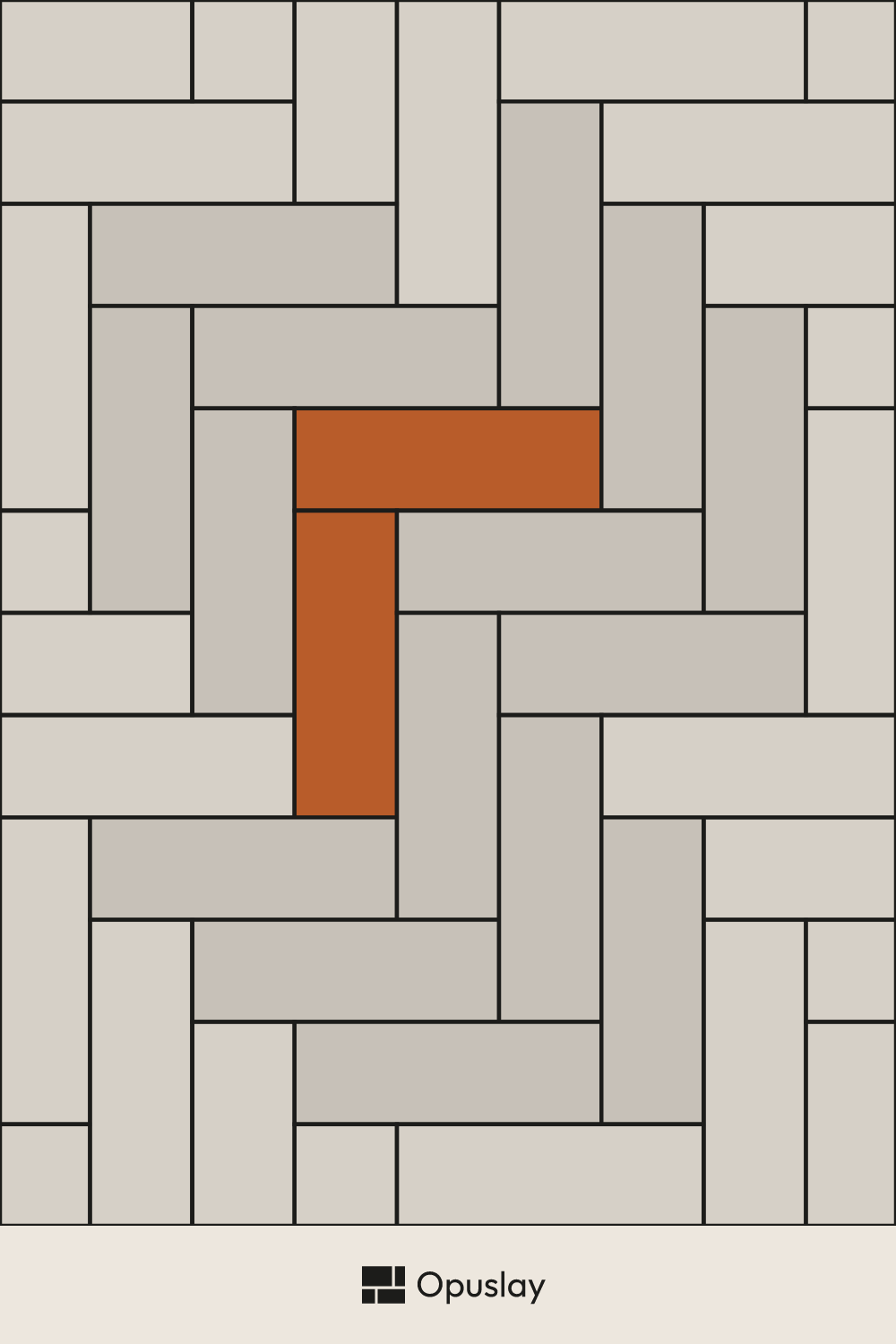
The 4x12 herringbone pattern lays a larger rectangular tile at a 90° angle to itself, producing the same zigzag joint structure as smaller herringbone sizes but with fewer, larger pieces per square foot — a scaled-up alternative to the standard 2x8 wood-look herringbone layout.
Last updated: 2026-07-05
4x12 Herringbone Pattern
Opuslay — tile layout worksheet- Room:
- 3 m × 2.5 m
- Units:
- Metric (cm / m²)
- Anchor:
- Left · Top
- Layout angle:
- Straight
- Tile colours:
- Single colour
Material breakdown
| Format | Qty / Pattern | Share | Qty / Room | Area / Room |
|---|---|---|---|---|
| 10.16x30.48 cm | 2 | 100.0% | 268 | 7.50 m² |
| Total | 2 | 100% | 268 | 7.50 m² |
What you'll need to buy
Tiles to buy
| 10.16x30.48 cm | 272 tiles | 8.42 m² |
Total 272 tiles · 8.42 m² (incl. 12% cuts & breakage)
Adhesive & grout
- Thin-set adhesive: ≈ 24.4 kg (2 × 50 lb bags) — recommended trowel: 10mm notch
- Grout — the tile sets the joint width, not you:
- ≈ 4.5 kg (1 × 10 lb bag) — 3mm joint, rectified / tight-set tile
- ≈ 7.5 kg (1 × 25 lb bag) — 5mm joint, natural or non-rectified tile
Adhesive: allow a little over on an uneven substrate, or if you back-butter large tiles — both eat more than a flat bed.
Grout: the 25 lb bag is the usual size (10 lb for small jobs). Buy it in one go and stick to a single bag size: bags from different batches can dry to slightly different shades.
It's the tile that decides the joint, not the setter — dry-lay a section to find your width. Assumes 9.5mm tile depth; adjust for your product — thicker tiles need more.
Share & export
Save the 4x12 Herringbone Pattern layout to your moodboard, or send the link to your tiler — it reopens with your room dimensions.

About the 4x12 Herringbone Pattern
4x12 herringbone became popular as wood-look plank tile grew in larger formats, offering the same parquet-inspired zigzag look with a bolder, more contemporary scale than the traditional 2x8 size.
Because the tile is larger, a 4x12 herringbone floor uses noticeably fewer pieces than a 2x8 layout of the same area, which can reduce both material handling and the number of visible joints.
Frequently Asked Questions
How does 4x12 herringbone compare to 2x8 herringbone?
Both use the same 90° zigzag structure, but 4x12 tile is larger, so a given floor area uses fewer pieces and shows fewer grout lines than the traditional 2x8 size.
How much waste should I allow for 4x12 herringbone?
A higher-than-average waste allowance is typical for herringbone at any size, usually around 15-20%, to account for angled cuts at the room's edges.
Is 4x12 herringbone suitable for bathroom floors?
Yes — like other wood-look herringbone sizes, 4x12 is commonly used in bathrooms and other wet areas to reproduce a parquet look without using real wood.
Can 4x12 herringbone be rotated 45 degrees to the walls?
Yes — as with any herringbone layout, the whole zigzag pattern can be rotated 45° relative to the room for a more dynamic, diagonal look, independent of the 90° angle between the tiles themselves.
See the 2x8 herringbone layoutSee the 6x24 herringbone layoutSee the 3x12 herringbone layoutSee the double herringbone (two 3x12 planks per arm, same weave at twice the scale)See the triple herringbone (three 6x36 planks per arm, the widest weave)