
Octagon and Dot Tile Pattern — 24 inch
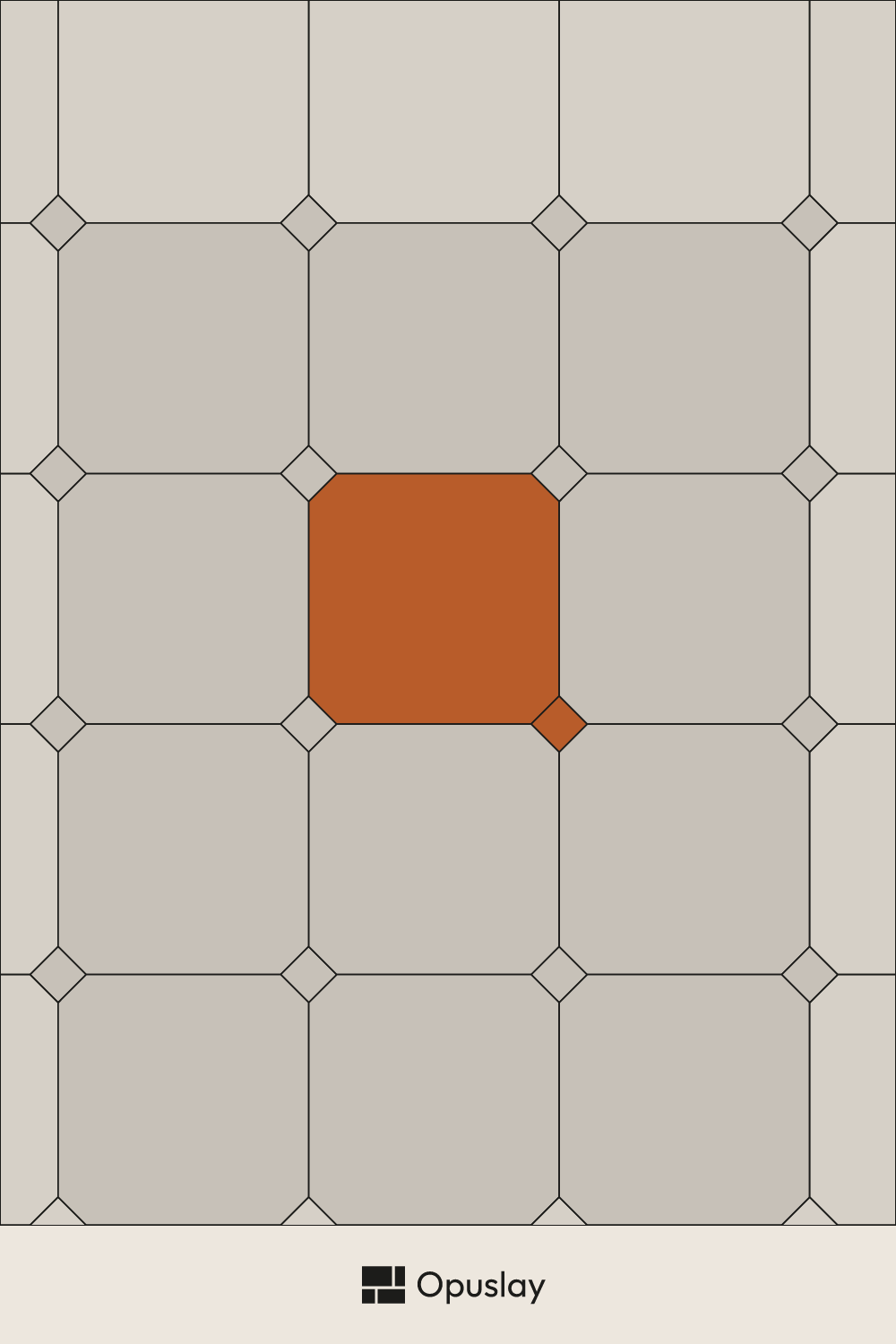
This is the large-format take on octagon and dot: 24"x24" octagons paired with a 3.8"x3.8" square cabochon dot, set at 45 degrees in the corner gap between four octagons. Where the classic 2-inch octagon and dot mosaic is a small mesh-mounted sheet built for bathroom floors, this is a single oversized tile designed to stand on its own as a statement floor for entryways, mudrooms, and open living spaces.
Last updated: 2026-07-19
Octagon and Dot Tile Pattern — 24 inch
Opuslay — tile layout worksheet- Room:
- 3 m × 2.5 m
- Units:
- Metric (cm / m²)
- Anchor:
- Left · Top
- Layout angle:
- Straight
- Tile colours:
- Single colour
Material breakdown
| Format | Qty / Pattern | Share | Qty / Room | Area / Room |
|---|---|---|---|---|
| 60.96x60.96 cm | 1 | 97.6% | 25 | 7.31 m² |
| 9.65x9.65 cm | 1 | 2.4% | 30 | 0.19 m² |
| Total | 2 | 100% | 55 | 7.50 m² |
What you'll need to buy
Tiles to buy
| 60.96x60.96 cm | 28 tiles | 10.41 m² |
| 9.65x9.65 cm | 32 tiles | 0.30 m² |
Total 60 tiles · 10.44 m² (incl. 39% cuts & breakage)
Adhesive & grout
- Thin-set adhesive: ≈ 40.5 kg (2 × 50 lb bags) — recommended trowel: 12mm notch, large format
- Grout — the tile sets the joint width, not you:
- ≈ 1.3 kg (1 × 10 lb bag) — 3mm joint, rectified / tight-set tile
- ≈ 2.1 kg (1 × 10 lb bag) — 5mm joint, natural or non-rectified tile
Adhesive: allow a little over on an uneven substrate, or if you back-butter large tiles — both eat more than a flat bed.
Grout: the 25 lb bag is the usual size (10 lb for small jobs). Buy it in one go and stick to a single bag size: bags from different batches can dry to slightly different shades.
It's the tile that decides the joint, not the setter — dry-lay a section to find your width. Assumes 9.5mm tile depth; adjust for your product — thicker tiles need more.
Share & export
Save the Octagon and Dot Tile Pattern — 24 inch layout to your moodboard, or send the link to your tiler — it reopens with your room dimensions.

About the Octagon and Dot Tile Pattern — 24 inch
Octagon and dot is a centuries-old floor layout, but for most of its history it has been built at a small, mosaic scale. Reproducing the same geometry at 24 inches is a recent move by porcelain manufacturers, mostly Italian and European producers working in large-format, stone-effect porcelain, rather than a long-standing US flooring standard.
It rides the same wave as the broader large-format tile trend — fewer, bigger pieces and fewer grout lines for a more continuous floor — applied for the first time to a pattern that used to only exist in miniature.
Frequently Asked Questions
What is a 24 inch octagon and dot tile?
A large-format floor tile shaped as a 24"x24" octagon, paired with a smaller 3.8"x3.8" square cabochon dot set at 45 degrees in the gap where four octagons meet. It is the large-scale version of the classic small octagon and dot mosaic.
How is this different from octagon and dot mosaic tile?
The classic version is a small 2-inch octagon and dot mosaic sold on 12x12 mesh sheets, mainly for bathroom floors. This is a single, oversized octagon tile meant to be laid piece by piece, more suited to entryways, mudrooms, and larger open floors.
What grout joint should I use for large-format octagon tile?
For rectified porcelain at this size, a 1/8" (3mm) grout joint is standard. Non-rectified tiles typically need a wider joint, around 3/16" (5mm), to allow for the less precise edges.
Where should large octagon and dot tile be used?
It works best as a floor feature in entryways, mudrooms, and open-plan living or dining areas, where the larger scale reads as a deliberate pattern rather than a busy mosaic underfoot.